

The Complete Houston Patio Cover Buyer’s Guide
Welcome to the Complete Houston Patio Cover Buyer's Guide
Before You Spend Thousands of Dollars on a Patio Cover, Read This First
Building a custom patio cover is one of the most rewarding investments you can make in your home.
A thoughtfully designed patio cover doesn’t simply provide shade—it changes the way you live. It transforms an underused backyard into a comfortable outdoor living space where families gather for birthdays, holidays, cookouts, football games, quiet mornings with coffee, and evenings spent with friends.
For many homeowners throughout the Greater Houston area, a patio cover becomes one of the most frequently used areas of the home.
Yet despite being a significant investment, many homeowners begin the planning process with very little reliable information.
Search online for patio cover advice, and you’ll find hundreds of articles discussing designs, materials, prices, and installation. Unfortunately, much of that information is generic, incomplete, or written for climates and building conditions that are very different from those found in Southeast Texas.
Houston presents a unique set of challenges that should influence every major decision you make before construction begins.
Extreme summer heat, high humidity, heavy rainfall, hurricane-season wind events, expansive clay soils, local permitting requirements, and neighborhood HOA regulations all play an important role in determining how a patio cover should be designed and constructed.
A patio cover that performs well in Arizona, Colorado, or Tennessee may not be the best solution for a home in Houston.
That’s why we created this guide.
What You'll Learn in This Guide
This guide has been organized to walk homeowners through every major stage of planning a patio cover project.
Choosing the Right Type of Patio Cover
Understanding Costs
Engineering, Permits, and HOA Requirements
Planning for Outdoor Living
Hiring the Right Contractor
Protecting Your Investment
Why this guide exists
Our goal isn’t simply to help you buy a patio cover.
Our goal is to help you make an informed decision that you’ll still be happy with ten, fifteen, or even twenty years from now.
Over the past two decades, homeowners across the Houston area have asked many of the same questions before beginning their projects.
- What type of patio cover should I choose?
- Is aluminum better than wood?
- Are insulated patio covers worth the additional investment?
- How much does a patio cover cost in Houston?
- Do I need a permit?
- Will my HOA approve the project?
- How do I know if a contractor is qualified?
- What questions should I ask before signing a contract?
- What mistakes should I avoid?
- Which upgrades provide the greatest long-term value?
Finding trustworthy answers isn’t always easy.
Many online articles are written to generate clicks rather than educate homeowners. Others focus almost entirely on selling products instead of helping readers understand the planning process.
We believe homeowners deserve better.
The purpose of this guide is to provide straightforward, practical information based on the realities of designing and building outdoor living spaces in the Greater Houston area.
Whether you’re simply gathering ideas or preparing to meet with contractors, this guide will help you better understand your options before making one of the largest improvements to your home.
Defining Your Goals Before You Build
Before choosing materials, comparing roof styles, or requesting estimates, one of the most important steps is understanding what you actually want your patio cover to accomplish.
Many homeowners begin the process by saying, “We just need shade.” But once the conversation begins, they often realize their goals are much broader.
They may want a comfortable place to entertain friends, a shaded area near the pool, an outdoor kitchen, protection from rain, a better view from inside the home, or a complete backyard transformation that feels like an extension of the living room.
A patio cover can be simple or elaborate. It can be designed for function, beauty, entertaining, privacy, cooking, year-round comfort, or future expansion. The best projects begin with a clear understanding of how the space will be used.
When homeowners define their goals early, the entire design process becomes easier, more accurate, and more successful.
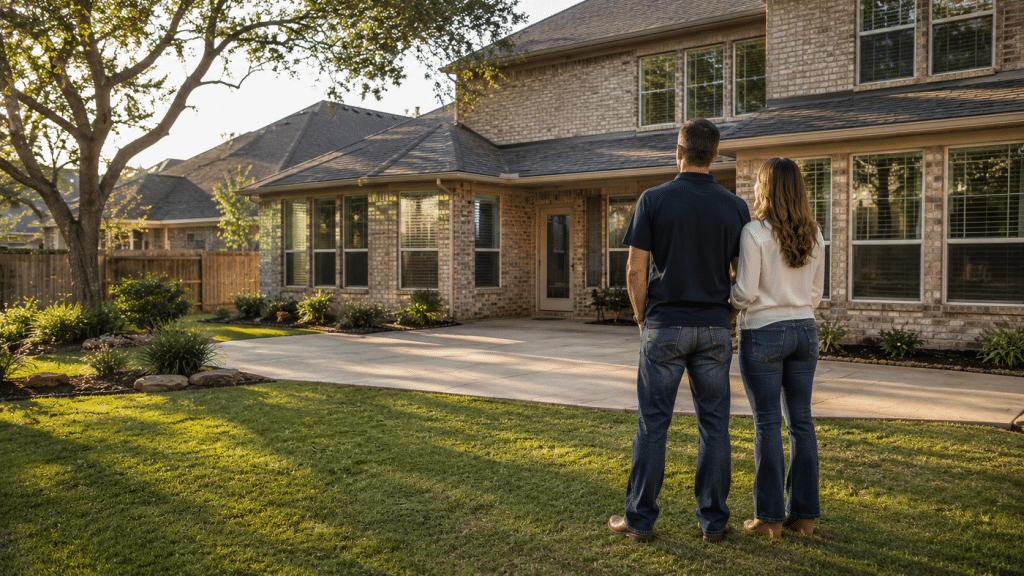
how do you want to use it?
Start With How You Want to Use the Space
The first question is not, “What size patio cover do I need?”
The better question is:
How do you want to live under it?
A patio cover designed for occasional shade will look very different from one designed for weekend entertaining, outdoor cooking, watching football, hosting family gatherings, or creating a full outdoor living room.
Think about how your family currently uses the backyard and how you would like to use it once the project is complete.
Do you imagine drinking coffee outside in the morning? Hosting birthday parties? Grilling during football season? Watching children swim while staying shaded? Creating a quiet retreat after work? Adding an outdoor kitchen later?
Those answers directly influence the size, shape, roof style, electrical planning, lighting, ceiling height, materials, and layout.
A patio cover should not be designed only for how your backyard looks today. It should be designed for how your family wants to enjoy the space for years to come.
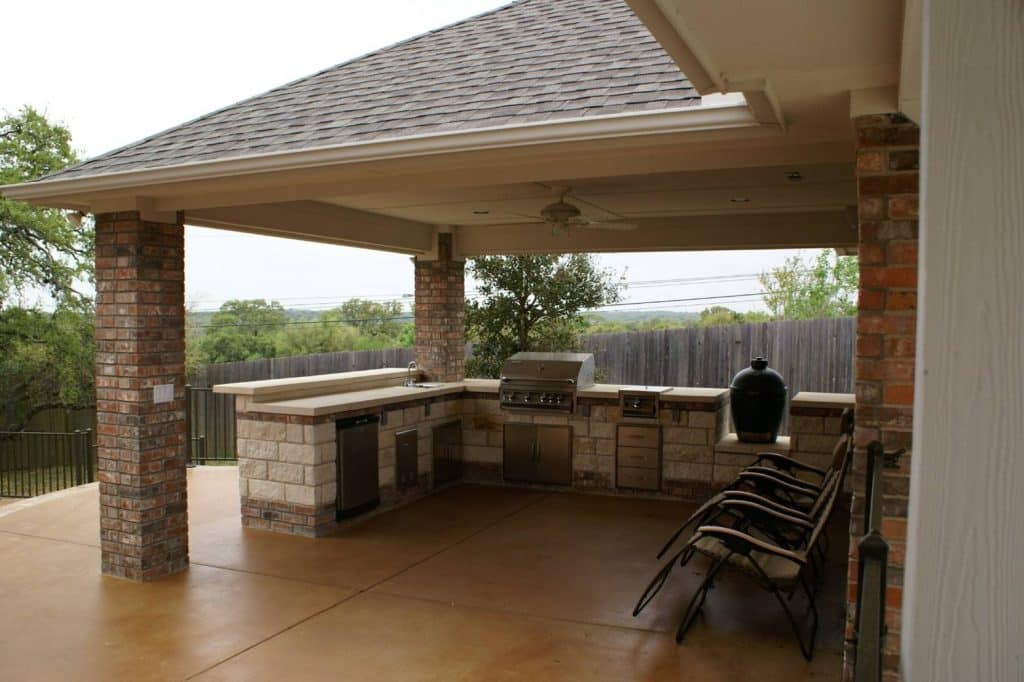
Shade VS. Living space
Shade Only vs. Full Outdoor Living Space
Some homeowners simply want relief from the Houston sun. Others want to create a true outdoor room.
Both are valid goals, but they require different design approaches.
A shade-focused patio cover may prioritize:
- Coverage over existing concrete
- Protection from afternoon sun
- Lower overall cost
- Simple roof design
- Low-maintenance materials
- Basic lighting or ceiling fans
A full outdoor living space may require:
- Larger covered area
- Electrical planning
- Outdoor kitchen layout
- Ceiling fans
- Recessed lighting
- TV placement
- Dining and seating zones
- Higher ceiling height
- Decorative columns or beams
- Drainage and utility coordination
- Space for future screens, fireplaces, or appliances
The mistake many homeowners make is building a patio cover for today’s budget without considering tomorrow’s plans.
For example, if you think you may eventually want an outdoor kitchen, TV, ceiling fans, or screen room, it is usually better to discuss those possibilities before construction begins. Even if you do not add every feature immediately, the structure can often be planned in a way that makes future upgrades easier and cleaner.
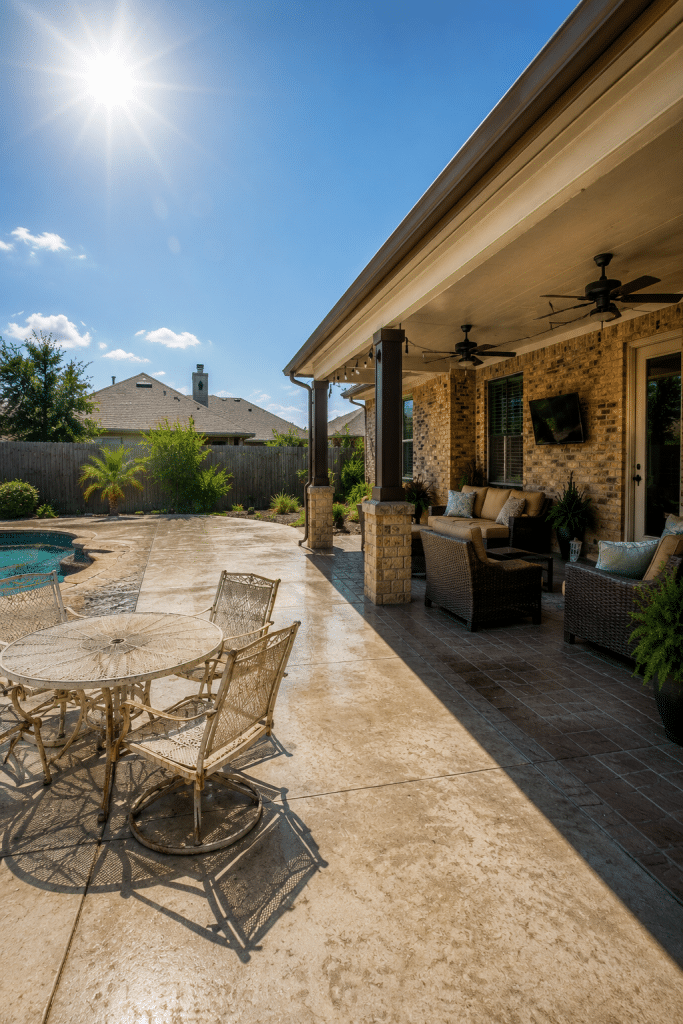
Consider the Direction of the Sun
Consider the Direction of the Sun
In Houston, sun exposure is one of the most important design factors.
A patio cover that looks beautiful but fails to block the strongest afternoon sun may not provide the comfort a homeowner expected.
The direction your home faces, the location of existing trees, the time of day you use the patio, and the position of the sun all matter.
For example, west-facing patios often receive intense afternoon sunlight, which can make the area uncomfortable even with partial shade. East-facing patios may be more comfortable in the afternoon but bright in the morning. South-facing spaces can receive extended sun exposure throughout much of the day.
A good patio cover design considers more than just the footprint of the slab. It considers how shade will move throughout the day and how the structure will perform during the hottest months of the year.
That is one reason custom design matters. A patio cover should be planned around the actual conditions of the home, not selected from a generic template.
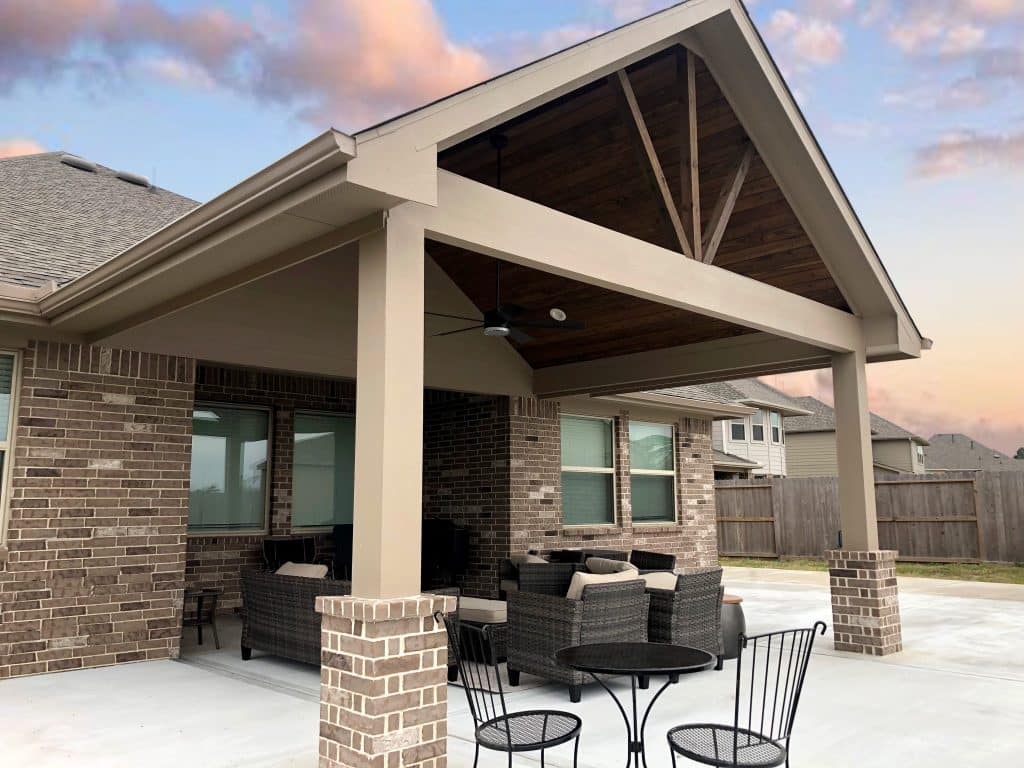
Think About Size Carefully
Think About Size Carefully
One of the most common regrets homeowners have after building an outdoor living space is wishing they had made it larger.
A patio cover may look big enough on paper, but once furniture, grills, tables, walkways, and people are added, the usable space can feel much smaller.
Before deciding on size, consider what you want beneath the cover.
Will there be:
- A dining table?
- Outdoor sofa or sectional?
- Grill or outdoor kitchen?
- Bar seating?
- Lounge chairs?
- Ceiling fans?
- Walkways around furniture?
- Space for children or pets?
- Room for entertaining guests?
A covered space should allow people to move comfortably without feeling crowded.
For many homeowners, the right size is not simply the size of the existing patio slab. In some cases, extending the concrete or redesigning the patio layout may create a much better result.
A professional consultation should include discussion of furniture placement, traffic flow, and future use—not just measurements.
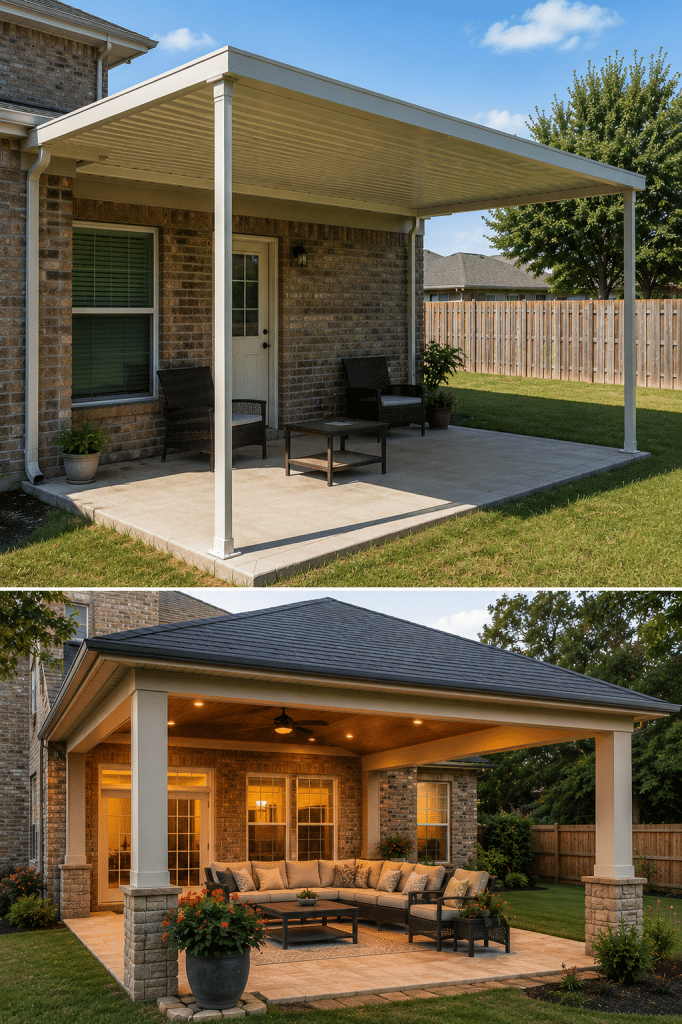
Blend In or Stand Out?
Decide Whether the Patio Cover Should Blend In or Stand Out
Some homeowners want their patio cover to look like it was part of the original home. Others want it to become a standout architectural feature.
Both approaches can work beautifully.
A design that blends in may use:
- Rooflines that match the home
- Similar trim colors
- Coordinated columns
- Matching shingles or finishes
- Proportions that feel original to the house
A design that stands out may include:
- Stained cedar beams
- Decorative gable roof
- Tongue-and-groove ceiling
- Stone column bases
- Outdoor kitchen features
- Statement lighting
- Higher ceilings
- Custom architectural details
The right choice depends on the home’s style, the homeowner’s preferences, and the overall purpose of the project.
In neighborhoods with strong HOA requirements, blending with the existing architecture may be especially important. In larger backyards or custom outdoor living projects, a more dramatic design may create the visual impact the homeowner wants.
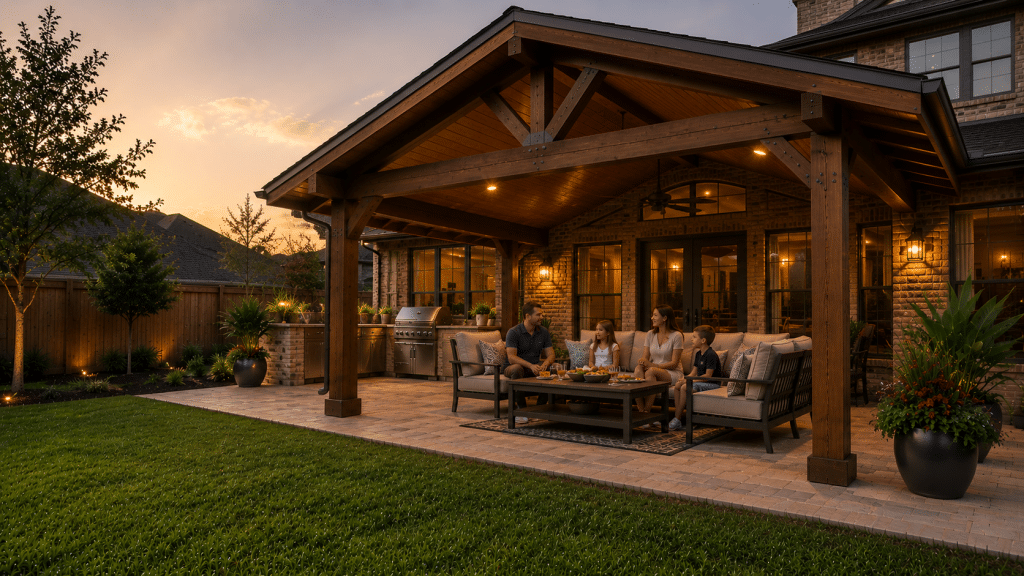
Plan for Comfort, Not Just Coverage
Plan for Comfort, Not Just Coverage
A roof alone does not guarantee comfort.
A truly usable outdoor living space should consider airflow, heat reduction, lighting, seating layout, and protection from rain.
Comfort features may include:
- Ceiling fans
- Insulated roof panels
- Proper roof height
- Recessed lighting
- Shade orientation
- Outdoor-rated electrical outlets
- Privacy screens
- Mosquito control options
- Outdoor curtains or retractable screens
- Strategic furniture placement
In Houston, airflow is especially important. A covered patio with low clearance and poor ventilation may feel hot and stagnant during the summer. Ceiling height, roof style, and fan placement all influence how comfortable the space feels.
The goal is not just to create shade. The goal is to create a place where people actually want to spend time.
Think About Outdoor Kitchens Early
Outdoor kitchens are one of the most popular additions to covered patios, but they require careful planning.
Even a simple outdoor kitchen can involve questions about:
- Grill placement
- Countertop space
- Ventilation
- Electrical outlets
- Gas lines
- Plumbing
- Refrigerator location
- Storage
- Lighting
- Seating
- Traffic flow
- Clearance from combustible materials
If an outdoor kitchen is part of the plan, it should be discussed early in the design process.
Trying to add an outdoor kitchen after the patio cover is already built can limit layout options and may increase costs. Planning ahead allows the structure, utilities, and seating areas to work together as one complete outdoor living environment.
Even if you are not ready to build the kitchen immediately, the patio cover can often be designed with future upgrades in mind.
Consider Future Screen Rooms
Many Houston homeowners love the idea of enjoying their patio without mosquitoes, flies, or other insects.
If you think you may eventually want to screen in the patio, that should be considered before construction begins.
A patio cover that may later become a screen room should be designed with attention to:
- Post spacing
- Openings
- Door placement
- Electrical locations
- Roof edges
- Drainage
- Flooring
- Attachment points
Not every patio cover layout is equally easy to screen later.
Planning for the possibility upfront can help avoid awkward modifications and give the finished screen room a cleaner, more intentional appearance.
Think About Your Home’s Value
A well-designed patio cover can improve how a home feels, functions, and presents to future buyers.
While every real estate situation is different, outdoor living spaces are highly appealing in the Houston market because they address a real lifestyle need: comfortable shade and usable outdoor space.
A patio cover that looks integrated with the home, uses durable materials, and creates an attractive entertaining area may increase the property’s perceived value.
However, quality matters.
A poorly designed or cheaply built structure can have the opposite effect if it looks temporary, mismatched, or poorly maintained.
The best long-term value usually comes from a patio cover that feels intentional, proportional, durable, and architecturally compatible with the home.
Set a Realistic Budget Range
Before requesting estimates, it helps to think in terms of a realistic budget range rather than a single number.
Patio cover pricing can vary widely based on:
- Size
- Materials
- Roof type
- Height
- Engineering
- Concrete work
- Electrical work
- Outdoor kitchen features
- Decorative finishes
- Permitting requirements
- Site conditions
A simple patio cover and a fully customized outdoor living space are not the same kind of project.
Setting a realistic range allows the contractor to recommend options that fit your goals without designing something far outside your comfort zone.
It also helps you compare estimates more fairly. The lowest price is not always the best value if the scope, materials, engineering, or warranty are not comparable.
Later in this guide, we will discuss patio cover costs in Houston in more detail.
Know Your Must-Haves and Nice-to-Haves
Before meeting with a contractor, it is helpful to separate your priorities into two categories:
Must-haves and nice-to-haves.
Must-haves might include:
- Shade over the main patio
- Ceiling fans
- Rain protection
- HOA-compliant design
- Low-maintenance materials
- Financing
- A design that matches the home
Nice-to-haves might include:
- Outdoor kitchen
- Decorative cedar ceiling
- Stone columns
- Recessed lighting
- TV wall
- Fireplace
- Screen enclosure
- Expanded concrete
- Premium finishes
This helps guide the design conversation.
If the full wish list exceeds the budget, a good contractor can help prioritize the features that matter most and suggest ways to phase the project intelligently.
Do Not Skip the Planning Stage
The planning stage is where many of the most important decisions are made.
It is also where many expensive mistakes can be avoided.
A well-planned patio cover should account for:
- How the space will be used
- Sun exposure
- Drainage
- Wind considerations
- Materials
- Roof design
- Existing architecture
- HOA requirements
- Permitting
- Electrical needs
- Future upgrades
- Budget
- Long-term maintenance
Rushing through this stage can lead to regrets later.
A quality contractor should ask detailed questions before recommending a solution. If the conversation immediately jumps to price without discussing design, function, materials, and site conditions, that may be a warning sign.
Key Takeaway
Before choosing a material, style, or contractor, define what success looks like.
Do you want shade?
A place to cook?
A place to entertain?
A complete backyard transformation?
A lower-maintenance outdoor living space?
A project that increases your home’s appeal?
The best patio cover is not the most expensive one, the largest one, or the one that looks best in a photo.
The best patio cover is the one that fits your home, your lifestyle, your budget, and your long-term goals.
A Patio Cover Is More Than Just Shade
Many homeowners begin researching patio covers because they’re looking for relief from the Texas sun.
While shade is certainly one of the biggest benefits, a professionally designed patio cover can offer much more.
A custom patio cover can:
- Expand your usable living space.
- Create a comfortable outdoor entertaining area.
- Protect outdoor furniture from prolonged sun exposure.
- Reduce heat on patios and adjacent rooms.
- Enhance the appearance of your home.
- Improve functionality throughout the year.
- Provide a foundation for future outdoor kitchens, fireplaces, lighting, fans, televisions, and screen rooms.
- Increase enjoyment of your backyard regardless of the season.
Rather than thinking of a patio cover as an accessory, many homeowners begin viewing it as an extension of their home itself.
The most successful projects are designed with that mindset from the beginning.
Committed to Quality
Our Philosophy
At Affordable Shade Patio Covers, we believe homeowners should never feel pressured into making an important decision before they fully understand their options.
An informed homeowner is more likely to choose a design that fits their lifestyle, budget, and long-term goals.
That’s why this guide focuses first on education.
If, after reading it, you decide to move forward with a custom patio cover, you’ll do so with a clearer understanding of the process and greater confidence in your decisions.
Whether you ultimately choose Affordable Shade Patio Covers or another qualified contractor, our hope is that this guide helps you avoid common mistakes and create an outdoor living space that your family will enjoy for decades.
- Built to Windstorm Standards and TDI Certifications
-
Custom on-site Construction
Labor & Manufacturer Warranties - Fully Insured and Certified, Registered Incorporation
- Guaranteed Craftsmanship-Long-Term Quality, Built to Last
Understanding Houston's Climate:
Why Where You Live Should Influence Every Patio Cover Decision
A Patio Cover That Works in Another State May Not Work in Houston
One of the biggest mistakes homeowners make when researching patio covers is assuming that advice found online applies equally everywhere.
It doesn’t.
Many of the articles you’ll find online are written for a national audience. They discuss patio cover materials, roof styles, and construction methods without considering one of the most important factors of all:
Location.
A patio cover designed for Phoenix, Denver, Atlanta, or Nashville may perform very differently in Houston.
The Greater Houston area presents one of the most demanding environments in the country for outdoor construction. From extreme summer temperatures and year-round humidity to hurricane-season storms and expansive clay soils, every component of a patio cover should be selected with Southeast Texas in mind.
Understanding these conditions before construction begins will help you make better decisions, protect your investment, and enjoy your outdoor living space for many years to come.
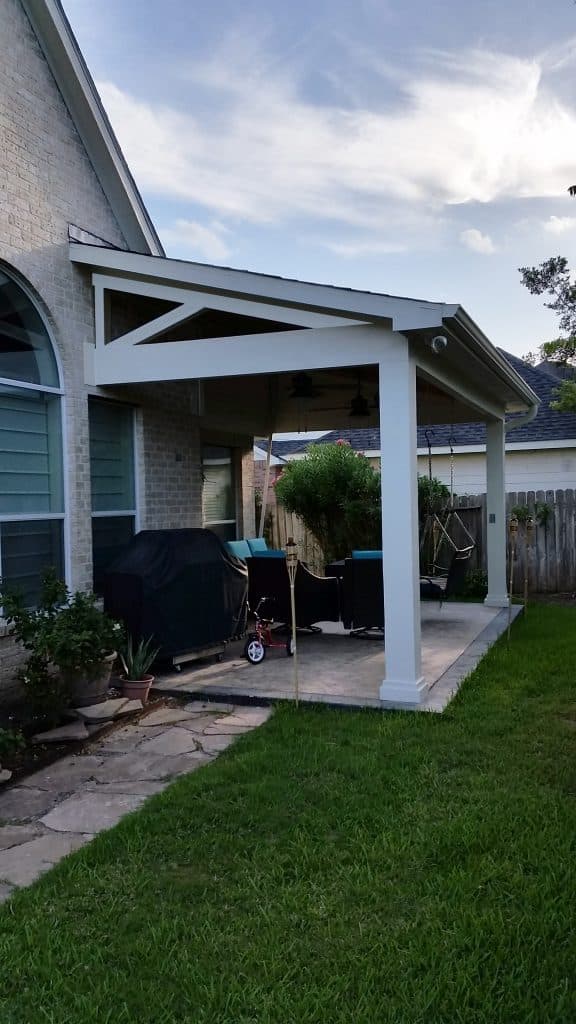
Houston’s Climate Is Unlike Almost Anywhere Else
Houston experiences a humid subtropical climate characterized by long, hot summers, mild winters, high annual rainfall, and frequent periods of elevated humidity.
Unlike many regions where outdoor living is limited to a few months each year, Houston homeowners often use their patios throughout most of the year. This creates an opportunity to significantly expand usable living space—but only if the patio cover is designed to perform in local conditions.
When planning your project, several environmental factors deserve careful consideration.
Intense Heat and UV Exposure
Summer temperatures in Houston regularly climb into the mid-to-upper 90s, with heat indexes often exceeding 100°F.
During the hottest months, an uncovered concrete patio can become uncomfortable—or even unsafe—for extended use.
Beyond personal comfort, prolonged ultraviolet (UV) exposure can affect nearly every component of an outdoor living area.
Over time, excessive sun exposure may contribute to:
- Fading outdoor furniture
- Increased surface temperatures on patios
- Premature wear of certain finishes
- Higher temperatures near windows and exterior doors
- Reduced comfort for family gatherings and outdoor cooking
A properly designed patio cover helps reduce direct solar exposure and creates a more comfortable outdoor environment during Houston’s hottest months.
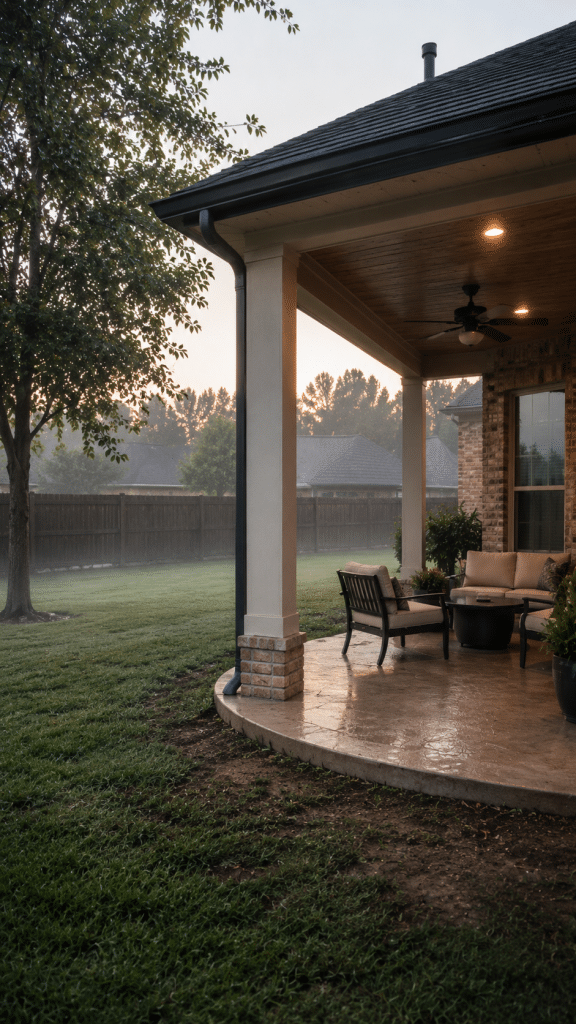
Humidity Changes Everything
Houston’s humidity isn’t just uncomfortable—it affects building materials.
Moisture in the air influences how different materials age, expand, contract, and require maintenance over time.
Depending on the material selected, humidity may contribute to:
- Paint deterioration
- Wood movement
- Mold or mildew growth
- Increased maintenance requirements
- Faster weathering of exposed finishes
For this reason, selecting materials suited to Gulf Coast conditions is often one of the most important long-term decisions homeowners make.
This doesn’t necessarily mean one material is always better than another. It means understanding the maintenance expectations associated with each option before construction begins.
We’ll compare those materials in detail later in this guide.
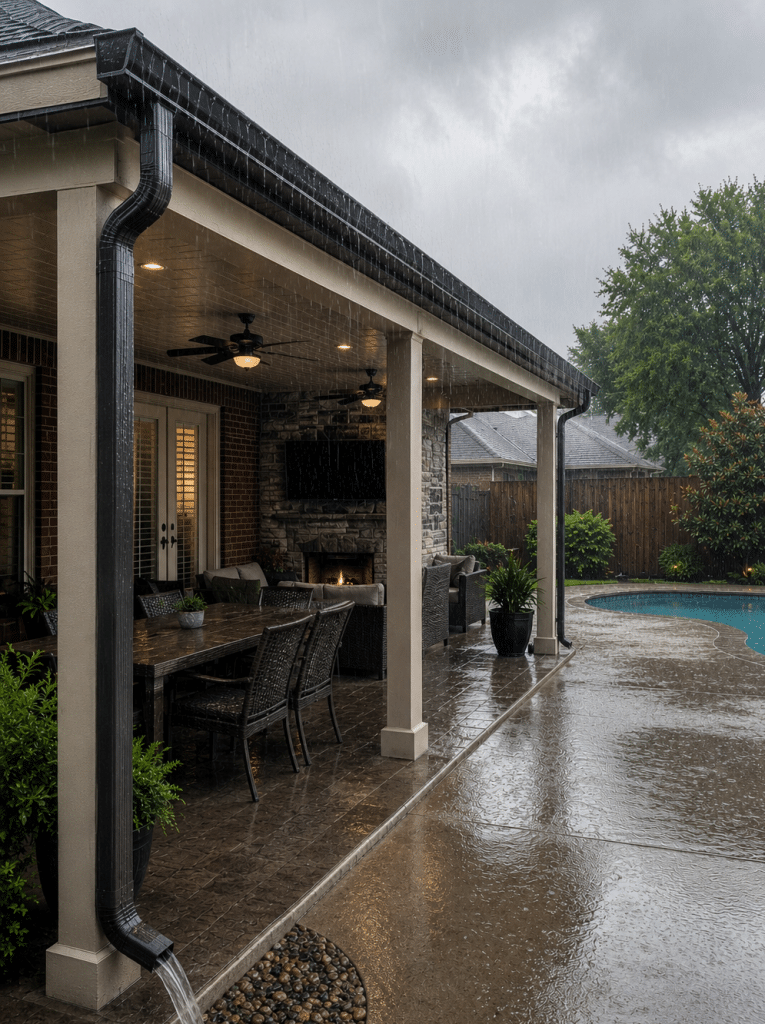
Houston’s Rainfall Requires Proper Drainage Design
Houston receives significant annual rainfall, and storms can produce heavy downpours in a very short period of time.
A beautiful patio cover that fails to manage water effectively can create long-term problems.
Proper drainage planning should consider:
- Roof pitch
- Gutter placement
- Downspout locations
- Water runoff patterns
- Existing grading
- Foundation protection
- Landscaping
One of the goals of a professionally designed patio cover is not simply to provide shade, but to manage rainwater in a way that protects both the structure and the surrounding property.
Drainage is one of those features homeowners rarely notice when it’s done correctly—but quickly notice when it isn’t.
Wind Matters More Than Most Homeowners Realize
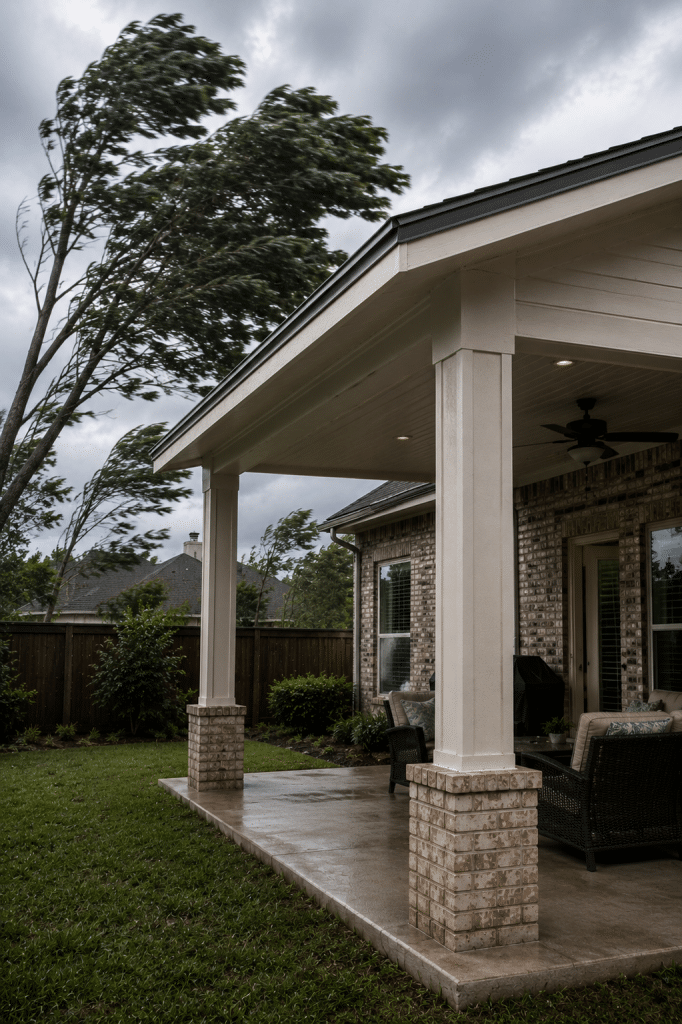
While Houston doesn’t experience hurricane conditions every year, the region is no stranger to strong wind events associated with tropical systems, thunderstorms, and seasonal weather patterns.
Those conditions place additional importance on structural design.
Every patio cover should be designed with attention to:
- Structural connections
- Post sizing
- Beam sizing
- Roof framing
- Foundation attachment
- Local building requirements
A patio cover isn’t simply a decorative addition—it is a permanent structure that should be designed to safely withstand the environmental conditions expected in the area where it is built.
Choosing a contractor who understands local construction practices can help ensure these considerations are addressed during the design process.
The Bottom Line
Houston’s climate should influence nearly every major decision made during the planning process.
From selecting materials and roof styles to engineering, drainage, ventilation, and long-term maintenance, local conditions matter.
The goal isn’t simply to build a patio cover that looks beautiful on the day it’s is completed.
The goal is to build one that continues performing beautifully through years of Houston heat, humidity, heavy rain, and changing weather conditions.
When your project is designed specifically for Southeast Texas, you’re investing in comfort, durability, and long-term value—not just shade.
A word from one of us
Contractor Insight
One of the most common mistakes homeowners make is selecting a patio cover style before thinking through how the space will be used.
A pergola may look beautiful in a photo, but it may not provide enough weather protection for a family that wants to grill, watch TV, and entertain during Houston summers. Likewise, a simple flat cover may provide shade but not create the architectural impact a homeowner wants for a long-term outdoor living investment. Visual appeal is only a fraction of the design process, attachment points, proper drainage, and staying up to code is where Affordable Shade is most useful during this stage of the process.
The most successful patio covers begin with the homeowner’s goals and then match the structure to those goals as close as possible.

Types of Patio Covers: Understanding Your Options Before You Choose
Once you understand your goals, the next step is choosing the right type of patio cover for your home.
This is where many homeowners begin to feel overwhelmed.
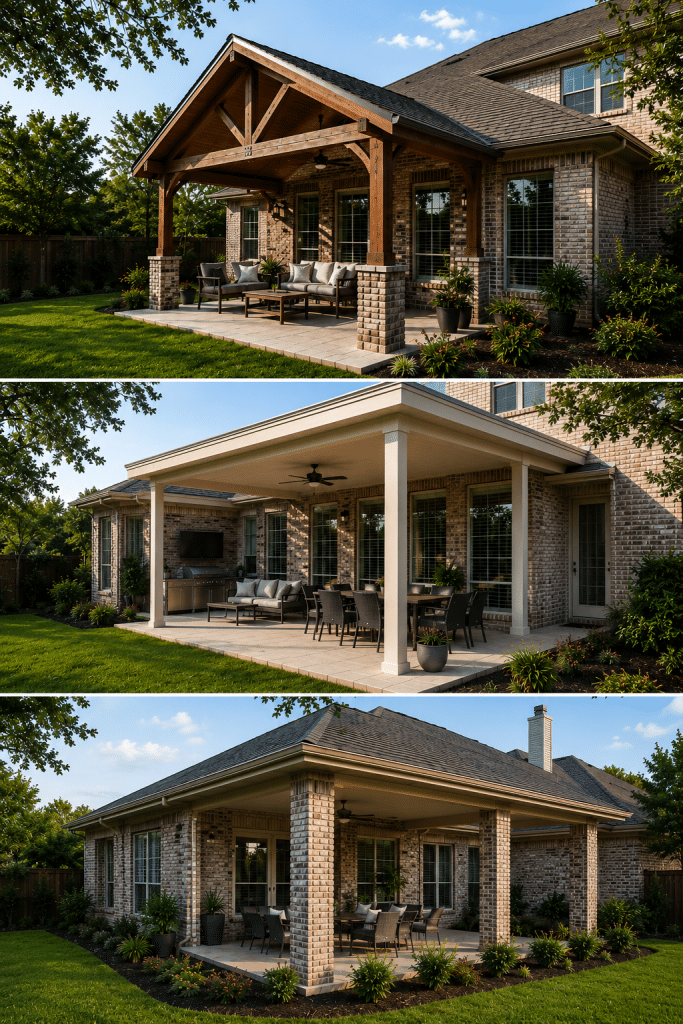
There are attached patio covers, freestanding covers, insulated patio covers, wood patio covers, aluminum patio covers, pergolas, screen rooms, carports, gable roofs, hip roofs, flat pans, shingles, metal roofing, decorative ceilings, and fully customized outdoor living structures.
At first, it can feel like every contractor is describing something different.
The truth is, most patio covers fall into a handful of major categories. Once you understand the strengths, limitations, and best uses for each type, the decision becomes much easier.
The right patio cover is not always the most expensive option. It is the option that best fits your home, your lifestyle, your budget, your neighborhood, and the way you want to use your backyard.
Types of Patio Covers:
Understanding Your Options Before You Choose
Attached Patio Covers
An attached patio cover is connected directly to the home.
This is one of the most common options for Houston homeowners because it creates a natural extension of the existing living space. In many cases, the patio cover is built over an existing patio, slab, back porch, or outdoor seating area.
An attached patio cover can make the backyard feel like part of the home rather than a separate outdoor area.
Attached patio covers are popular because they can provide:
- Convenient access from the house
- Shade near back doors and windows
- Protection from rain when entering or exiting the home
- A more seamless indoor-outdoor living experience
- Space for outdoor dining, grilling, or relaxing
- Better visual integration with the existing structure
When designed properly, an attached patio cover can look like it has always belonged to the home.
This is especially important in neighborhoods where appearance, roofline, materials, and HOA approval matter.
When an Attached Patio Cover Makes Sense
An attached patio cover is often the best choice when the homeowner wants the covered space to function like an outdoor living room.
It works especially well when the backyard already has:
- A rear door leading to the patio
- Existing concrete
- A pool area near the home
- Space for outdoor furniture
- A natural traffic flow from the kitchen or living room
- Windows or doors that receive strong sun exposure
Attached covers are also useful when homeowners want to reduce direct sunlight near the back of the home.
For many Houston homes, the back patio becomes one of the hottest parts of the property during summer. A properly designed attached patio cover can make that area much more comfortable while also improving how the home feels from inside.
Important Considerations for Attached Patio Covers
Because an attached patio cover connects to the home, the design must be handled carefully.
A contractor should consider:
- How the patio cover ties into the existing structure
- Roofline compatibility
- Wall attachment points
- Drainage
- Existing windows and doors
- Fascia height
- Brick, siding, or stucco conditions
- Electrical planning
- Load transfer
- Permits and code requirements
This is not an area where shortcuts are acceptable.
An attached patio cover should not look like an afterthought. It should feel like a planned addition that respects the original architecture of the home.
Poorly designed attached covers can create problems with water flow, roof transitions, flashing, appearance, or structural performance.
A well-designed attached patio cover can dramatically improve the home.
Attached Patio Covers
An attached patio cover is connected directly to the home.
This is one of the most common options for Houston homeowners because it creates a natural extension of the existing living space. In many cases, the patio cover is built over an existing patio, slab, back porch, or outdoor seating area.
An attached patio cover can make the backyard feel like part of the home rather than a separate outdoor area.
Attached patio covers are popular because they can provide:
- Convenient access from the house
- Shade near back doors and windows
- Protection from rain when entering or exiting the home
- A more seamless indoor-outdoor living experience
- Space for outdoor dining, grilling, or relaxing
- Better visual integration with the existing structure
When designed properly, an attached patio cover can look like it has always belonged to the home.
This is especially important in neighborhoods where appearance, roofline, materials, and HOA approval matter.
Freestanding Patio Covers
A freestanding patio cover is not attached to the house.
Instead, it is supported independently by posts and its own structural system.
Freestanding patio covers are often used when the desired outdoor living area is away from the home, such as near a pool, garden, outdoor kitchen, fire pit, or detached patio area.
This option gives homeowners more flexibility in placement.
A freestanding patio cover may be ideal when:
- The existing home structure is difficult to attach to
- The homeowner wants shade near a pool
- The backyard layout works better away from the house
- There is a detached outdoor kitchen or seating area
- The home has unusual rooflines or limited attachment points
- The homeowner wants a separate retreat or pavilion-style structure
Freestanding covers can create a destination within the backyard.
Instead of simply extending the home, they can define a separate outdoor zone.
Pergola vs. Patio Cover
This is one of the most common points of confusion.
A pergola is primarily an architectural shade feature.
A patio cover is usually a more functional roof structure designed to provide stronger protection from sun and rain.
A pergola may be the right choice if the homeowner wants:
- Partial shade
- Decorative style
- An open-air feel
- A garden feature
- A lower-profile structure
- A space that still feels exposed to the sky
A patio cover may be the better choice if the homeowner wants:
- Full shade
- Rain protection
- Outdoor kitchen coverage
- Ceiling fans
- Recessed lighting
- TV protection
- Year-round usability
- More protection for furniture
Some homeowners combine both, using a solid patio cover for the main outdoor living area and a pergola as a design accent elsewhere in the yard.
Custom Wood Patio Covers
Custom wood patio covers are often chosen for their beauty, strength, and architectural character.
A well-built wood patio cover can dramatically change the appearance of a backyard and create a true outdoor living space rather than just a shaded area.
Wood allows for design features such as:
- Exposed cedar beams
- Decorative knee braces
- Tongue-and-groove ceilings
- Gable roofs
- Hip roofs
- Matching shingles
- Stained finishes
- Custom columns
- Integrated lighting
- Outdoor kitchens
- Fireplace walls
- TV walls
For homeowners who want a premium look, a custom wood patio cover is often one of the most attractive options.
It can be designed to match the home or create a statement feature in the backyard.
Aluminum Patio Covers
Aluminum patio covers are another popular option because they are lightweight, durable, and generally low maintenance.
They are often used for both insulated and non-insulated patio cover systems.
Aluminum does not rot like wood and can perform well when properly installed. It can also be a practical choice for homeowners who want shade and weather protection without the maintenance expectations of a wood structure.
Aluminum patio covers may appeal to homeowners who want:
- Low maintenance
- Clean appearance
- Good durability
- Faster installation
- Practical shade
- Long-term weather resistance
- A more budget-conscious option than custom wood
The appearance of aluminum systems can vary significantly. Some look basic, while others are more finished and attractive.
The key is choosing a system that fits the style of the home and the expectations of the homeowner.
Things Homeowners Should Know...
One of the easiest ways to make the wrong decision is to choose a patio cover simply because it looked good on another house.
A design that works beautifully on one home may not be right for another.
Differences in roof height, brick color, window placement, backyard layout, HOA rules, slab size, sun exposure, drainage, and budget can all change the best solution.
The goal is not to copy a photo.
The goal is to design a patio cover that fits your home.
That may mean choosing a simple insulated cover, a custom cedar gable, a freestanding poolside structure, or a full outdoor living build.
The right answer depends on the property.
A common mistake is shopping only by product name.
For example, a homeowner may say they want an “aluminum patio cover” or a “wood patio cover” before they fully understand how they want to use the space.
Material matters, but it is only one part of the decision.
A better approach is to begin with the goal:
- Do you want full shade?
- Do you want rain protection?
- Do you want a premium custom look?
- Do you want low maintenance?
- Do you want an outdoor kitchen?
- Do you want the cover to match the home?
- Do you want the most affordable practical solution?
- Do you plan to add screens later?
Once those answers are clear, the best type of patio cover becomes much easier to identify.
Beyond the type of patio cover, homeowners also need to consider roof style.
The roof style affects appearance, height, drainage, shade, cost, and how well the patio cover blends with the existing home.
Common roof styles include:
- Flat or low-slope patio covers
- Gable patio covers
- Hip roof patio covers
- Shed roof patio covers
- Combination roof designs
Each has its place.
A simple flat or low-slope cover may be practical and cost-effective. A gable patio cover may create a more open, dramatic look. A hip roof may blend beautifully with certain home designs. A shed roof may work well when tying into specific rooflines or wall heights.
We will cover roof styles in more detail later in this guide, but it is important to understand that the roof style should be chosen based on both function and architecture.
There are many types of patio covers, but the decision becomes much simpler when you focus on purpose.
If you want a practical, low-maintenance shade solution, an insulated patio cover may be an excellent fit.
If you want a premium outdoor living space that feels like part of the home, a custom wood patio cover may be the better choice.
If you want a separate shaded destination near a pool or garden, a freestanding structure may make the most sense.
If you want partial shade and architectural interest, a pergola may work beautifully.
The right patio cover is the one that fits your home, your climate, your budget, and the way your family wants to live outdoors.
Patio Cover Materials:
Aluminum, Wood, Insulated Panels, and What Works Best in Houston
Find what works best
In Houston, the best patio cover material is not always the one that looks best in a brochure.
It is the one that fits the home, performs well in local conditions, supports the homeowner’s lifestyle, and matches the level of maintenance they are comfortable with.
A homeowner who wants low maintenance may be happier with an insulated aluminum cover. A homeowner who wants a premium outdoor living space may prefer a custom cedar or wood-framed structure. A homeowner focused on resale appeal may want a roofline and finish that closely match the original home.
The right answer depends on the project.
That is why material selection should always be part of a larger design conversation.
Choosing the right patio cover material is one of the most important decisions a homeowner will make.
The material affects the appearance, comfort, maintenance, cost, durability, and long-term value of the project. It also influences how well the patio cover performs in Houston’s heat, humidity, rainfall, and seasonal storms.
Many homeowners begin with a simple question:
Should I choose aluminum or wood?
That is a good starting point, but the real answer depends on what you want the patio cover to do.
Some homeowners want the lowest-maintenance shade solution possible. Others want a high-end custom outdoor living space with cedar beams, a stained ceiling, and a roofline that looks like it was built with the original home. Some want practical comfort. Others want maximum curb appeal and resale value.
There is no single material that is perfect for every project.
The best choice depends on your home, your goals, your budget, and how much maintenance you are willing to take on over time.
Why Material Choice Matters So Much in Houston
Houston is not gentle on outdoor structures.
Any patio cover built in the Greater Houston area must deal with:
- Extreme summer heat
- High UV exposure
- Year-round humidity
- Heavy rainfall
- Tropical storms
- Wind events
- Mold and mildew pressure
- Expansive clay soils
- Long outdoor-use seasons
A material that performs well in a dry climate may need more maintenance in Southeast Texas.
Likewise, a material that looks beautiful when new may age poorly if it is not properly selected, finished, installed, or maintained.
This is why homeowners should avoid choosing a patio cover material based only on price or appearance.
The right material should support both the design vision and the long-term performance of the structure.
All About Aluminum Patio Covers
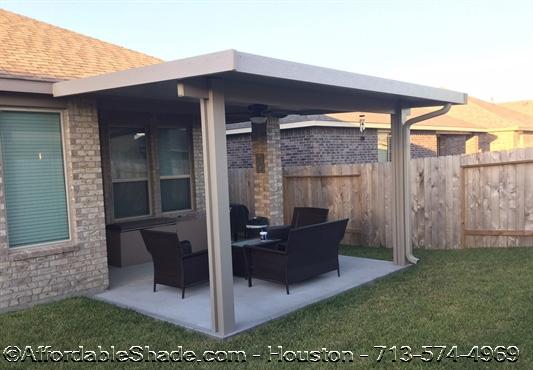
Aluminum patio covers are one of the most common options for homeowners who want a practical, durable, low-maintenance shade structure.
Aluminum is lightweight, resistant to rot, and does not require the same type of staining or painting schedule as wood. For many homeowners, that low-maintenance appeal is one of the biggest advantages.
Aluminum patio covers can range from very basic to much more finished systems, depending on the product, design, and installation quality.
They are often used for:
- Standard backyard covers
- Carports
- Poolside shade structures
- Low-maintenance outdoor living areas
- Budget-conscious projects
- Homes where a clean, simple appearance is preferred
When installed correctly, aluminum can be a strong and practical choice for Houston homeowners who want shade and rain protection on a lower budget.
Limitations of Aluminum Patio Covers
Aluminum is practical, but it may not be the right choice for every homeowner.
Depending on the design, aluminum patio covers may have a simpler appearance than custom wood structures. Some homeowners feel that basic aluminum covers do not add the same architectural warmth or visual character as cedar, stained beams, or a roofline designed to match the house.
Potential limitations may include:
- Less custom architectural character
- More basic appearance in lower-end systems
- Possible rain noise in some non-insulated designs
- Fewer premium decorative options compared to custom wood
- May not blend as seamlessly with every home style
- Can look too plain if not designed carefully
This does not mean aluminum is a bad choice.
It simply means homeowners should be clear about their expectations. If the goal is practical shade and lower maintenance, aluminum may be excellent. If the goal is a high-end outdoor living feature that looks like a custom home addition, wood or a hybrid custom structure may be a better fit.
Benefits of Aluminum Patio Covers
Aluminum patio covers offer several practical advantages.
They are typically:
- Low maintenance
- Resistant to rot
- Resistant to insect damage
- Lightweight
- Durable
- Clean-looking
- Available in insulated options
- Often faster to install than complex custom wood structures
- Suitable for many budget ranges
For homeowners who want function first, aluminum can make a lot of sense.
It is especially appealing for families who want shade over an existing patio but do not necessarily want a large custom cedar structure or major outdoor living build.
Aluminum systems can also provide a clean finished underside, especially when insulated panels are used.
Your Custom Wood Patio Covers
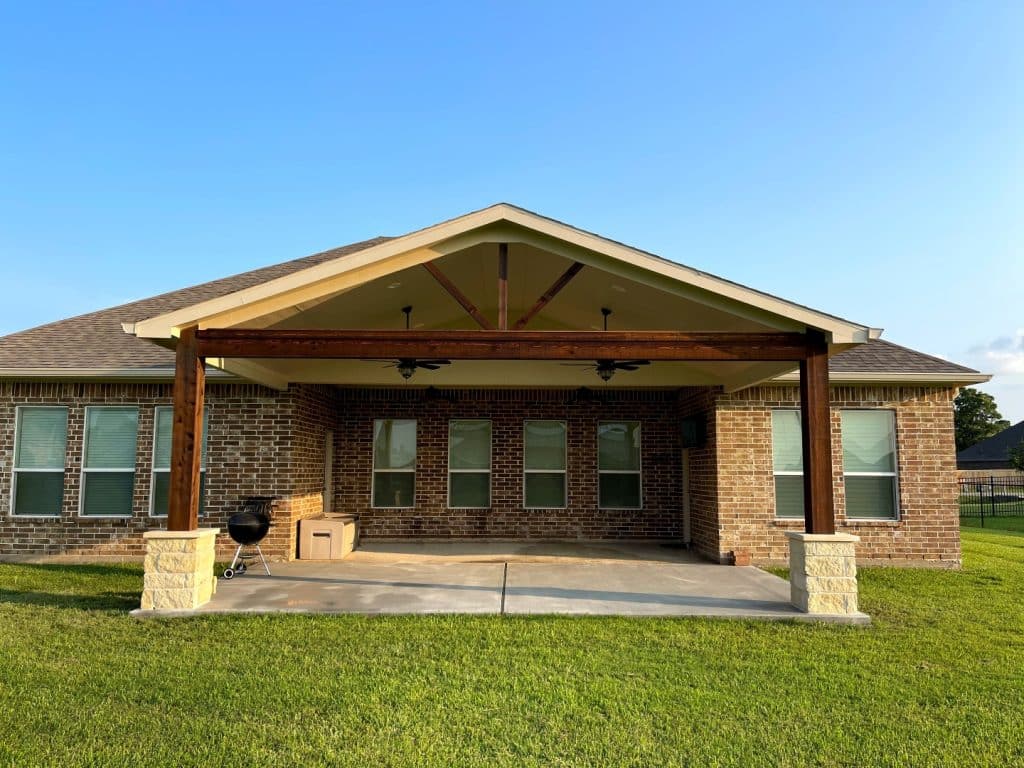
Benefits of Custom Wood Patio Covers
The biggest advantage of wood is design flexibility.
Wood allows the patio cover to be shaped, detailed, and finished in ways that are difficult to achieve with basic metal systems.
A custom wood structure can be designed to match the home’s existing architecture or create a standout feature in the backyard.
For homeowners who want the patio cover to feel like a permanent addition rather than an accessory, wood is often the preferred choice.
Custom wood patio covers are chosen for a very different reason.
They are not just about shade. They are about beauty, structure, and architectural impact.
A custom wood patio cover can look like a true extension of the home. It can be designed with matching shingles, gable or hip rooflines, stained cedar beams, tongue-and-groove ceilings, decorative columns, stone bases, and integrated outdoor living features.
For many homeowners, this is the premium choice.
A wood patio cover may include:
- Cedar beams
- Exposed rafters
- Tongue-and-groove ceiling
- Decorative knee braces
- Matching roof shingles
- Gable roof design
- Hip roof design
- Painted or stained columns
- Stone or brick column bases
- Recessed lighting
- Ceiling fans
- Outdoor kitchen integration
- Fireplace or TV wall planning
When designed and built properly, a wood patio cover can completely transform a backyard.
Cedar Patio Covers
Cedar is commonly used in premium patio cover projects because of its appearance and natural outdoor character.
It has a warm tone, attractive grain, and works beautifully in exposed beam designs.
Cedar is often used for:
- Beams
- Rafters
- Decorative braces
- Tongue-and-groove ceilings
- Trim accents
- Stained outdoor living structures
A stained cedar patio cover can create a rich, high-end look that works especially well with brick homes, stone columns, outdoor kitchens, and poolside living areas.
For many Houston homeowners, cedar provides the custom look they want when building a backyard that feels upscale and inviting.
However, cedar still needs proper finishing and maintenance. Sun exposure and humidity can affect the color and surface over time, especially if the wood is not protected.
Painted Wood and Hardie-Style
Not every wood patio cover needs to be fully stained.
Many homeowners prefer painted columns or Hardie-style finishes that coordinate with the existing home.
This approach can create a cleaner, more traditional look while still allowing the roof structure to be custom-built.
Common combinations include:
- Stained cedar beams with painted columns
- Painted Hardie-style posts with stone bases
- White or neutral trim with stained tongue-and-groove ceiling
- Brick or stone column bases that match the home
- Painted fascia and trim with a shingle roof
This hybrid approach is especially useful when the homeowner wants both warmth and architectural integration.
The stained ceiling and beams can provide character, while the painted columns help the patio cover blend into the home’s existing exterior.
